A Santoku knife is a celebrated symbol of Japanese culinary innovation, renowned worldwide for its versatility and precision in the kitchen. Let’s explore in depth what makes the Santoku so special, what tasks it’s designed for, and how it compares to other essential knives.
The Santoku knife originates from Japan and is now a fixture in homes and professional kitchens around the globe. Its name and design are rooted in the practical needs of everyday cooking, making it a go-to all-purpose blade for a wide spectrum of food preparation tasks.
- The Meaning of “Santoku”
- Design Features
- Primary Uses in the Kitchen
- 1. Slicing
- 2. Dicing
- 3. Chopping
- Bonus Uses
- Technique and Cutting Style
- Prices & Features of Different Santoku Brands
- Value Santoku Knives (Under $100)
- Mid-Range & Premium Santoku Knives ($100–$250)
- High-End & Collector Santoku Knives ($250+)
- Santoku Knife Comparison Table
- Comparisons With Other Knives
- Santoku vs. Chef’s Knife
- Santoku vs. Specialty Japanese Knives
- Care and Maintenance
- Conclusion
The Meaning of “Santoku”
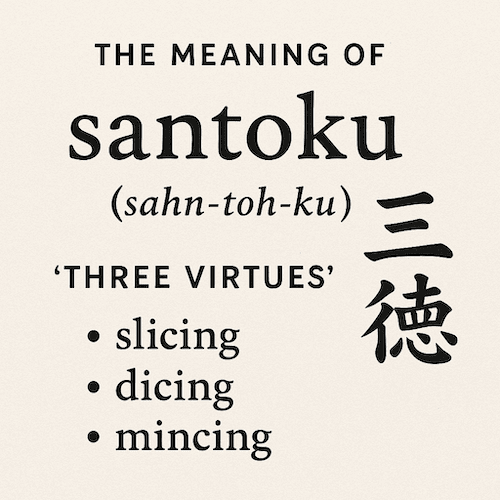
The Japanese word “Santoku” (三徳) translates to “three virtues” or “three uses.” This can be interpreted in two ways:
Design Features
A Santoku knife can be easily recognized by its distinctive features:
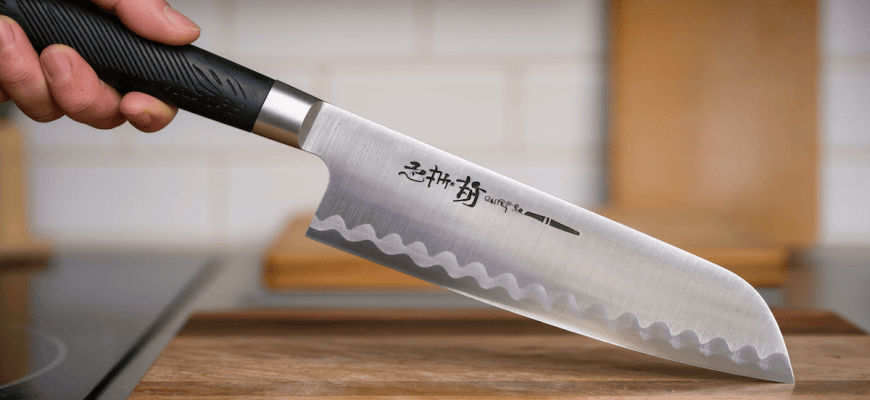
- Blade Length: Usually between 5 and 7 inches (about 13–18 cm), notably shorter than most Western chef’s knives.
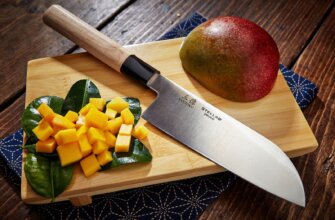
- Shape: A broad, flat profile with a sheepsfoot blade—meaning the cutting edge is nearly straight while the spine curves steeply down to meet the tip.
- Edge: The blade is typically flat or with very little curvature, supporting precise up-and-down (push) cutting rather than rocking.
- Special Features: Many modern Santoku knives have a Granton edge (small dimples along the blade) to reduce food sticking while cutting.
- Handle: Japanese Santoku handles may be cylindrical or octagonal for ergonomic grip and balanced weight.
Primary Uses in the Kitchen
The Santoku earns its reputation for versatility by excelling at these core kitchen functions:
1. Slicing
- Produces thin, even slices of vegetables (like cucumbers or carrots) and delicate proteins such as fish and chicken.
- The straight edge makes precise cuts, useful for dishes where presentation matters (e.g., sushi, crudo).
2. Dicing
- Uniform dicing of vegetables, fruits, and boneless meats is effortless, thanks to the knife’s wide blade and well-balanced feel.
- Ideal for prepping ingredients for soups, salads, and stir fries.
3. Chopping
- Excels at chopping herbs, onions, and garlic. The blade’s width gives space for scooping up chopped ingredients directly into a pot or pan.
Bonus Uses
- Mincing meat or herbs for dumplings, burgers, or sauces.
- Slicing cheese, dicing nuts, and even making julienne strips for garnishes.
Technique and Cutting Style
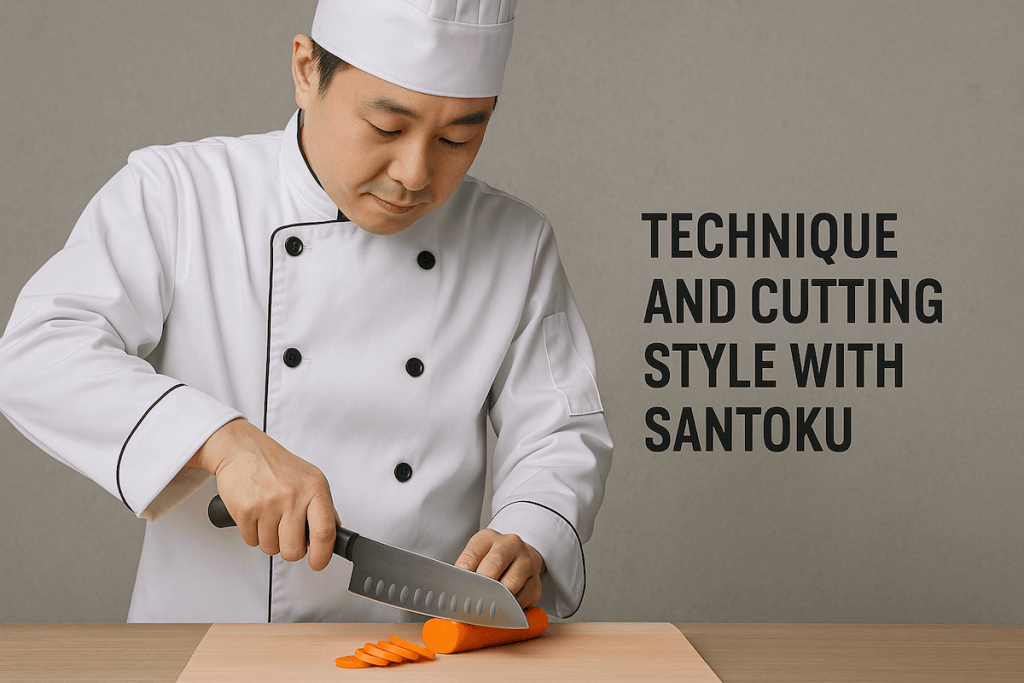
Unlike Western chef’s knives, which use a rocking motion on the cutting board, the Santoku is designed for a straight up-and-down push cut or tap-chop:
- Push-Cutting: The knife moves straight down and forward, using the flat blade edge for crisp, clean cuts.
- Tap-Chopping: Excellent for quickly breaking down vegetables, especially when speed and precision are required.
- No Rocking: The limited curve on the cutting edge means rocking is inefficient.
The Santoku’s compact size and balanced weight make it particularly suitable for cooks with smaller hands or those seeking greater control and comfort during repetitive tasks.
Prices & Features of Different Santoku Brands
Santoku knives come in a range of price points—from entry-level models under $50 to premium, handcrafted blades exceeding $200. Brand, steel type, handle material, blade finish, country of origin, and sharpening angle are critical features when choosing the right knife. Below is an overview of popular models and what they offer in 2025.
Value Santoku Knives (Under $100)
- Kai Seki Magoroku Akane Santoku: $31.50, dishwasher-safe, lightweight, plastic resin handle, decent sharpness for casual home cooks.
- MAC Superior Santoku: $75, lightweight, Western-style pakka wood handle, MV stainless steel, sharp and easy to maintain.
Mid-Range & Premium Santoku Knives ($100–$250)
- Wüsthof Classic Santoku: £99–£139 ($120–$170), high-carbon steel, triple-riveted ergonomic handle, ultra-sharp 11-degree edge for effortless slicing.
- Maison Damas Akita: €109–€151 ($120–$165), robust and balanced, hand-finished blade, versatile for any task.
- Miyabi 6000MCT Santoku: ~$220, SG2 micro-carbide steel, hammered “Tsuchime” finish, cocobolo pakkawood handle, handmade in Japan, 63 HRC hardness, katana edge for superior sharpness.
High-End & Collector Santoku Knives ($250+)
- Santoku SG-2 Kurouchi Tsuchime: Features micro-carbide semi-stainless steel, complex hand-forged finish, superior edge retention; price varies, generally above $250.
Santoku Knife Comparison Table
| Model | Price (USD) | Blade Steel | Handle | Features | Edge Angle | Best For |
|---|---|---|---|---|---|---|
| Kai Seki Magoroku Akane | $31.50 | High-carbon SS | Resin | Dishwasher safe, lightweight | ~15° | Entry level |
| MAC Superior Santoku | $75 | MV Stainless Steel | Pakka wood | Lightweight, mono-steel construction | ~15° | Daily use |
| Wüsthof Classic Santoku | $120–170 | High-carbon steel | Riveted polymer | Ergonomic, ultra-sharp (11°), pro | 11° | Precision slicing |
| Maison Damas Akita | $120–165 | Japanese steel | Wood/Composite | Hand-finished, robust, balanced | 14–16° | Versatile tasks |
| Miyabi 6000MCT Santoku | ~$220 | SG2, powder steel | Pakkawood | Hand-hammered, katana edge, 63 HRC | 9-12° | Collector/Pro Chef |
| Santoku SG-2 Kurouchi Tsuchime | $250+ | Semi-stainless | Ebony/Wood | Hand-forged, top edge retention | 9-12° | Edge durability |
Premium Santoku knives offer better steel, ergonomic custom wood handles, and advanced finishes (like Tsuchime hammering) for food release. More affordable models are perfect for beginners and daily prep, while high-end choices shine in professional and collector settings.
Comparisons With Other Knives
Santoku vs. Chef’s Knife
- Blade Length: Santoku (5–7 in) is shorter and lighter than most Western chef’s knives (8–10 in).
- Edge: Santoku has a flat edge for push cuts, while chef’s knives have a curved “belly” for rocking motions.
- Precision: Santoku offers more control for thin slicing and fine work; chef’s knives excel at large, heavy-duty cuts and bone separation.
- Best Uses: Use Santoku for vegetable prep, thin slicing, and controlled dicing. Use a chef’s knife for large pieces of meat, separating chicken parts, or hearty vegetables.
Santoku vs. Specialty Japanese Knives
- Nakiri: Optimized for vegetables only; Santoku can handle meat and fish as well.
- Deba: Designed for filleting fish and cutting small bones.
- Santoku: More of an all-around performer, ideal for daily kitchen use and a great first Japanese knife.
Care and Maintenance
Proper care is key to your Santoku serving you for years:
- Hand Wash Only: Always wash manually with mild soap and warm water—never use a dishwasher, as harsh chemicals and heat can damage the blade and handle.
- Dry Thoroughly: Wipe dry immediately to prevent corrosion. This is especially important for high-carbon steel blades.
- Sharpen Regularly: Maintain the edge using a whetstone or professional sharpening service; most Santoku knives benefit from a fine, 10–15 degree bevel.
- Store Safely: Use a knife block, magnetic rack, or sheath to protect the blade—and your fingers—from dulling and accidents. Never toss it in a drawer unprotected.
Conclusion
The Santoku knife is a masterful, do-it-all tool designed to take on most kitchen tasks: slicing, dicing, and chopping a wide variety of foods with efficiency and style. Its manageable size, precise control, and thoughtful Japanese engineering make it a lovable favorite for both beginner cooks and professionals. If you seek a single, reliable kitchen knife that adapts gracefully to everyday needs, the Santoku is an excellent choice.
When shopping for a Santoku, look for one with a high-quality steel blade, ergonomic handle, and good balance. With proper care, your Santoku could easily become the most versatile and trusted knife in your culinary toolkit.

Hey. I’m the author of this blog. Ever since I was a kid, I’ve seen my dad slickly stabbing. Later he taught me how to throw knives and axes at a target. Then I fell in love with knives, especially about them. This blog is in honour of my dad.